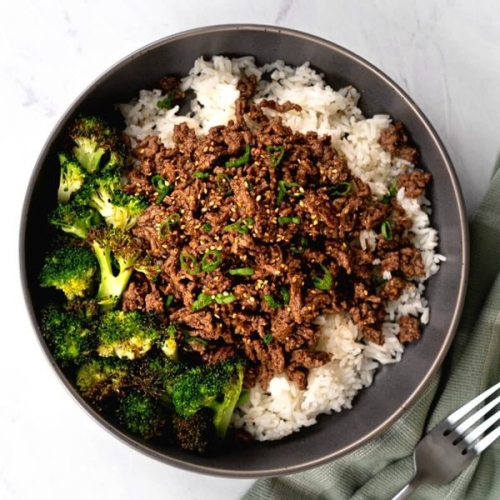
These Korean Ground Beef Bulgogi Rice Bowls are ideal when time isn’t on your side. Quick and easy to make, they’re packed with protein, making them perfect for a busy weeknight dinner or a convenient, last-minute lunch.
Each serving delivers 25g of protein, 6g of carbs, and 9g of fat, at 193 calories, making it a smart calorie and macro-friendly option.
Watch How To Make This Bulgogi Rice Bowl Recipe
While traditional Korean Beef Bulgogi often requires a marinating time of 2-4 hours or even an overnight marinade soak, not to mention the task of thinly slicing the meat, our Bulgogi Rice Bowl recipe uses ground beef instead for a quick-fix solution.
We get it that sometimes, time is of the essence, or maybe you’re just not in the mood for extensive prep work. That’s where this recipe is awesome! It allows you to quickly whip up a Korean bulgogi bowl to satisfy those Korean cuisine cravings without lengthy marination and slicing.
With some ingredient swaps in the Bulgogi sauce, we’ve transformed it into a healthy option that’s both calorie and macro-friendly.
Bulgogi is a traditional Korean dish made of thinly sliced beef, either sirloin or ribeye, that’s marinated in a blend of soy sauce, brown sugar, sesame oil, garlic, rice vinegar, and a few other key ingredients.
After doing a quick Google search (unfortunately, I don’t speak Korean), I learned that ‘Bulgogi’ is a combo of two words, ‘Bul’ meaning fire, and ‘Gogi’ meaning meat.
So, ‘Bulgogi’ literally translates to ‘fire meat’. This refers to the traditional way of cooking it over an open flame, often seen in Korean BBQ restaurants where tables come equipped with a central fire pit for grilling the meat.
Calories And Macros – How To Make It Healthy
Korean Beef Bulgogi is generally a healthy dish, thanks to its quality ingredients. However, like anything, moderation is key. The ingredients, while clean and nutritious, can easily add up in calories if you’re not careful.
Some cuts of meat are leaner than others, and a fattier cut can quickly transform a healthy meal into one that’s high in calories coming from fat. Additionally, the traditional Bulgogi sauce, while finger-licking delicious, includes brown sugar. Without careful measurement, this can significantly increase your carb intake.
To make our version lower in calories and macro-friendly, with a focus on high protein and lower fats and carbs, we’ve made some slight ingredient swaps. These tweaks keep the calories in check while still getting the dish’s iconic flavors.
Bulgogi Rice Bowl Ingredients
For the Bulgogi Beef:
Lean Ground Beef: We chose 96/4 for its high protein and lower fat content. It also keeps the recipe quick and easy to prepare.
For the Bulgogi Sauce:
Typical bulgogi sauce includes pear or apple and sweet rice wine. We’ve omitted these to lower the carbs and simplify the recipe. Feel free to add them if available, but remember to adjust your calories and macros accordingly.
Garlic Paste: Chosen over minced garlic for its time-saving convenience.
Ginger Paste: Opted for ginger paste instead of minced ginger to speed up the prep process.
Soy Sauce: Low sodium variant used to reduce overall sodium intake.
Sesame Oil: Essential for authentic Bulgogi flavor, though we used a smaller amount than traditional recipes.
Korean chili paste: Optional. Add Gochujang (red pepper paste) if you prefer a spicy kick.
For the Garnish (optional):
Green Onions: Adds a fresh, crisp touch to the dish.
Toasted Sesame Seeds: Brings a nutty flavor and adds crunch.
How To Make This Bulgogi Rice Bowl Recipe
Bulgogi Sauce: In a mixing bowl, combine garlic paste, ginger paste, sugar substitute, low-sodium soy sauce, sesame oil, and chili sauce (optional). Mix the ingredients well and set the sauce aside.
Ground Beef Bulgogi: Heat a skillet over medium heat and lightly spray it with non-stick cooking spray.
Sear both sides of the beef until browned.
Then, use a spatula to break it into chunks, making sure there’s no pink color remaining.
Stir the bulgogi sauce mixture into the beef until well combined.
Allow the mixture to simmer for about 2 minutes, or until heated through.
Assembling the Bulgogi Rice Bowl: In a bowl, lay a base of rice. Top the rice with the cooked bulgogi ground beef. For the bulgogi bowl toppings garnish with green onion and toasted sesame seeds, if desired.
Equipment Needed
For making the bulgogi rice recipe, the equipment needed is relatively straightforward. Here’s a list of the kitchen items to make your bulgogi beef bowl:
Skillet or Frying Pan: A large skillet or frying pan for cooking the ground beef and for sautéing any additional ingredients. Non-stick is helpful but not necessary.
Soy sauce: Tamari for a gluten-free option or coconut aminos for a soy-free and lower sodium alternative.
Garlic Paste and Ginger Paste: Fresh minced garlic or ginger, or ground garlic/ginger powder.
Rice: Bulgogi and rice go hand in hand but you can go withquinoa for a protein-rich option, cauliflower rice for a low-carb alternative, or brown rice for a whole-grain choice.
What To Serve With Bulgogi Beef Bowls
Short Grain Rice (Sushi Rice): Short-grain rice, is commonly used in Korean cuisine and known as “sushi rice” in Western stores. It’s stickier than long-grain rice and is usually found in the Asian section of grocery stores. You can also use any other type of rice like jasmine, rose, or even brown rice for a whole-grain choice.
Cauliflower rice: for a low-carb alternative.
Quinoa: if you want an extra boost in protein.
Kimchi: A classic Korean side dish made from fermented cabbage and spices, adding a tangy and slightly spicy flavor to complement the savory Bulgogi.
Cucumber Salad: A light, refreshing salad with a vinegar-based dressing can provide a crisp contrast to the rich flavors of the Bulgogi.Pickled Radishes: Offering a crunchy and tangy element that pairs well with ground beef.
In a mixing bowl, combine garlic paste, ginger paste, sugar substitute, low-sodium soy sauce, sesame oil, and chili sauce (optional).
Mix the ingredients well and set the sauce aside
Ground Beef Bulgogi:
Heat a skillet over medium heat and lightly spray it with non-stick cooking spray.
Place the ground beef in the skillet.
Cook until both sides of the beef are browned. Then, use a spatula to break it into chunks, making sure there’s no pink color remaining.
Stir the bulgogi sauce mixture into the beef until well combined.
Allow the mixture to simmer for about 2 minutes, or until heated through.
Assembling the Bulgogi Rice Bowl:
In a bowl, lay a base of rice.
Top the rice with the cooked bulgogi ground beef.
For the bulgogi bowl toppings garnish with green onion and toasted sesame seeds, if desired.
Measuring Ingredients:
We always recommend using a kitchen digital scale for measuring your ingredients. Why? Because it’s all about accuracy. Using weighted measurements helps you nail the recipe every time and ensures you’re sticking to your calorie and macro targets. It’s a simple step that can make a big difference in your cooking and health goals!
Nutritional Disclaimer:
The nutritional information is based on the ingredients and brands we used derived from a calorie and macro tracking app. For accurate results, we recommend calculating the nutritional information based on the specific ingredients and brands you use.
Did You Know?rating and sharing recipes is one of the best ways you can support your favourite food bloggers? If you make this recipe, we would love if you clicked the stars below to leave a rating and/or sharing a photo on social media by tagging @TastyFitMacros or using the hashtag #tastyfitmacros !
FAQ
What kind of rice goes with Bulgogi?
Traditionally, Bulgogi is served with short-grain white rice, which has a sticky texture that complements the tender meat. This type of rice is often referred to as ‘sushi rice’ outside of Korea and is the staple accompaniment for many Korean dishes. However, you can serve Bulgogi with brown rice, which is higher in fiber. For those looking for a low-carb alternative, cauliflower rice is also a popular choice.
What is a Bulgogi Bowl?
A Bulgogi Bowl is a dish that features the key components of the traditional Korean Bulgogi but served in a bowl, typically over rice. It consists of marinated and grilled or pan-cooked beef (in this case, ground beef for ease and speed), along with a variety of toppings such as vegetables and garnishes.
What can I use if I don’t have ground beef?
Feel free to use ground chicken, ground turkey, tofu, or a plant-based meat alternative. Keep an eye on the fat content, though, as it can significantly affect the calorie and macro count of the dish.
What’s a good substitute for the sugar substitute mentioned in the recipe?
If you prefer not to use sugar substitutes like stevia or erythritol, you can use honey, maple syrup, or even a smaller amount of brown sugar, keeping in mind the change in calorie and macro content.
Is there a way to make this dish spicier or milder?
To adjust the heat level, you can vary the amount of chili sauce or Gochujang you use. For a milder taste, you can omit it entirely or use a little bit of pepper flakes instead.
How can I meal prep this recipe for the week?
Just cook the ground beef with the sauce as the recipe outlines, then pop it in an airtight container and refrigerate. Do the same with your rice (or any other carb source) and any veggies you’re adding. For an even quicker grab-and-go option, pre-portion the beef and rice into containers based on your caloric and macro needs—perfect for taking to work for lunch or having ready for dinner.
Did you try making this recipe?
Did you try making this Korean beef bulgogi bowl, we’d love to hear from you! Please leave a comment and rating below to share your experience with this bulgogi and rice recipe as it helps other members.
Also, don’t forget to tag us @tastyfitmacros on Instagram and use the hashtag #tastyfitmacros. We’re excited to see your tasty fit creations and would love to feature them with our followers!
Looking for other recipes like this? Try these:
Jeannie notes.. Above is curated for evaluation and recommendation from tastyfitmacros.com


Leave a Reply