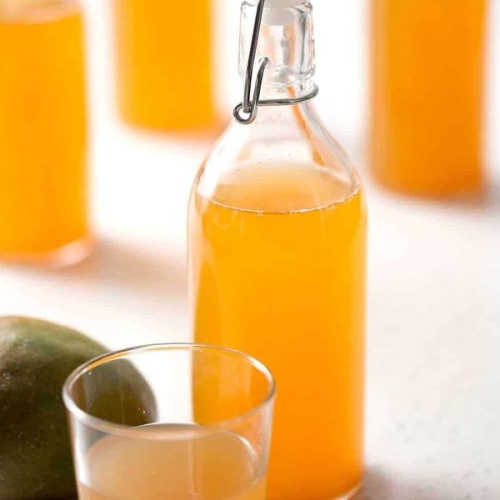
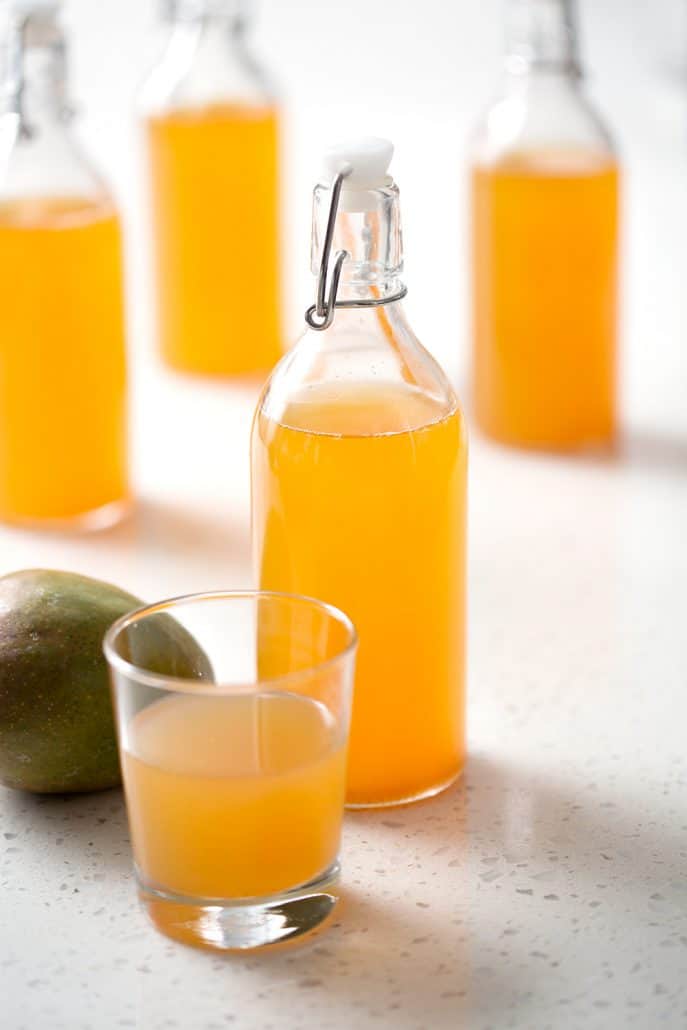
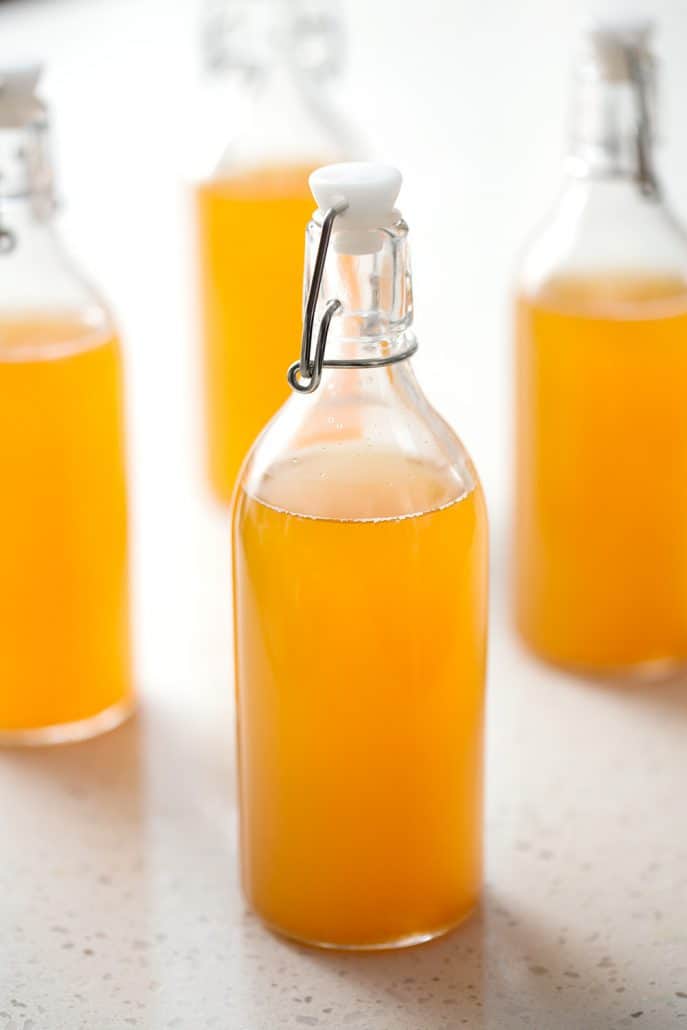
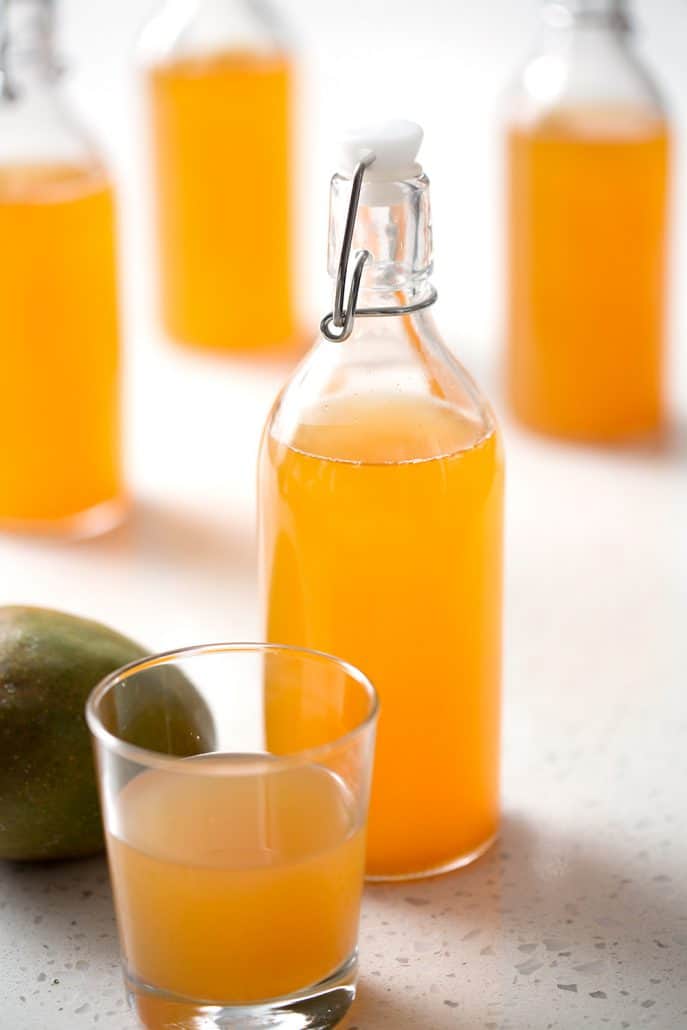
This Mango Kombucha recipe has the right balance of fruity
sweetness from the mango and the tartness of the kombucha. The mango leaves the
kombucha a wonderful golden color, like liquid sunshine. It’s delicious and the
best kombucha flavor!
Before you begin, this is a more advanced kombucha-making recipe. I’d try just following my How to Make Kombucha Tea at Home recipe before trying this one. It will be much easier if you’ve got a handle on the basics.
What are the best kombucha flavors?
My favorite kombucha flavors are the fruity ones like this Mango Kombucha or my Raspberry Thyme Kombucha. However, if you want something with just a hint to flavor, try my Honey Lavender Kombucha.
Can you add honey to kombucha?
Sure. Most kombucha recipes use refined sugar and sweeten
the plain kombucha. However, I use honey for the fermentation process and to
sweeten plain kombucha.
What does kombucha taste like?
The fermentation process eats up all the sugar that is
initially added to kombucha so plain kombucha doesn’t taste sweet. It actually
tastes quite acidic and tart and sometimes it even taste like vinegar.
How do you sweeten kombucha?
To sweeten kombucha, you can add honey and/or fruit.
How do you add flavor to kombucha?
To add flavor you can add fruit, herbs and spices. Other recipes for kombucha flavors will tell you to bottle the kombucha right along with the fruit. I don’t like to do that because I don’t want to have to strain the kombucha as I drink it. It’s definitely adding another step to the kombucha-making process but the mango makes it taste so good that I don’t mind.
Can you put frozen fruit in kombucha?
Absolutely. In fact, that’s exactly what this recipe
requires. However, as long as you can find ripe, juicy mangoes you can also use
fresh.
Kombucha Second Fermentation
The purpose of the second fermentation is to make the
kombucha carbonated. It’s totally optional but most people seem to prefer it.
There are a few important things to remember.
Take care to ‘burp’ the bottles each day. Burping means that you need to open the bottles and release the pressure the fermentation creates. This is no joke. This is very important. Do not forget because if the pressure builds up, the bottles could explode.
Kombucha brewing is best when it’s between 68-78°F. So if your house is warmer then that will speed up the fermentation process. You may need only one or two days during the summer for your second fermentation versus a week during the winter where you may have to leave it for 5-7 days. The longer you leave it the more carbonated it will become.
When you are finished with the second fermentation then place the bottles in the fridge. Many people assume that the cold temps stop the fermentation process however it merely slows it down. If you let it sit in the fridge for months, don’t be surprised it the taste has changed and it tastes like super carbonated vinegar.
This Mango Kombucha recipe has just the right amount of sweetness to pair with the drink’s natural tang. This recipe is allergy friendly (gluten, dairy, shellfish, nut, egg, and soy free) and suits the autoimmune protocol diet (AIP), and Paleo diets.
Prep Time2 daysd
Total Time2 daysd
Course: Drink
Cuisine: American
Servings: 10cups
Calories: 71kcal
Instructions
Add the mango and honey to a saucepan.
Heat with slightly mashing the mango.
Remove from heat as soon as the honey softens.
Let the honey and mango mixture cool to room temperature.
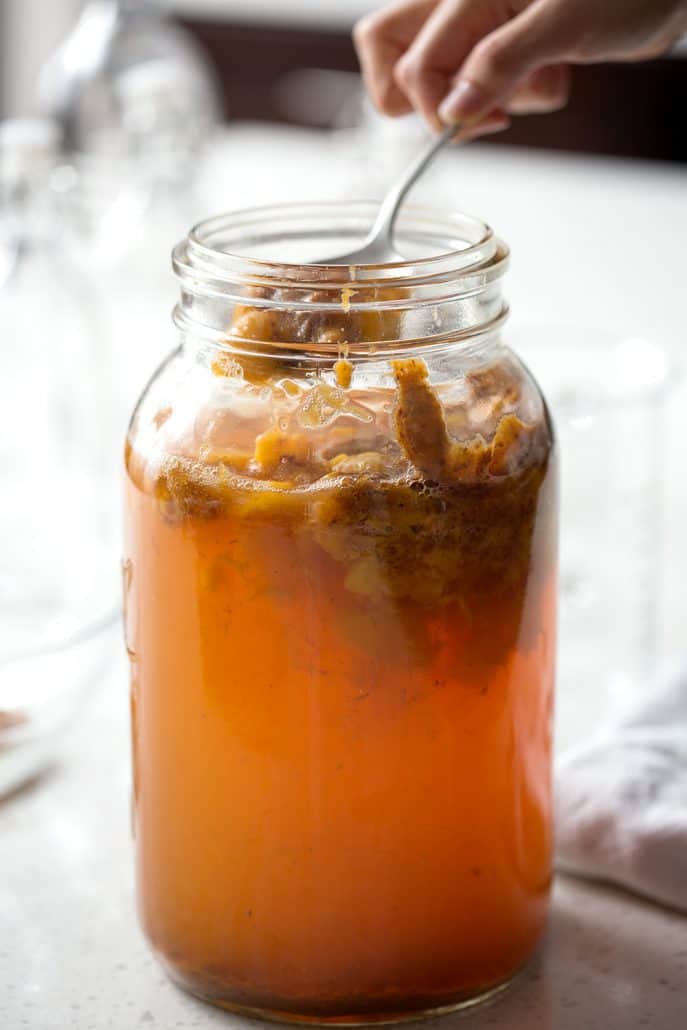
You’ll want to add the mango and honey mixture to your jar of homemade kombucha after you remove the SCOBY but before you transfer to bottles.
Cover with your cloth and secure with a rubber band.
Place somewhere at room temperature out of direct sunlight (such as a cabinet) and let ferment for 1-2 more days. The temperature greatly affects the speed at which the tea will ferment.
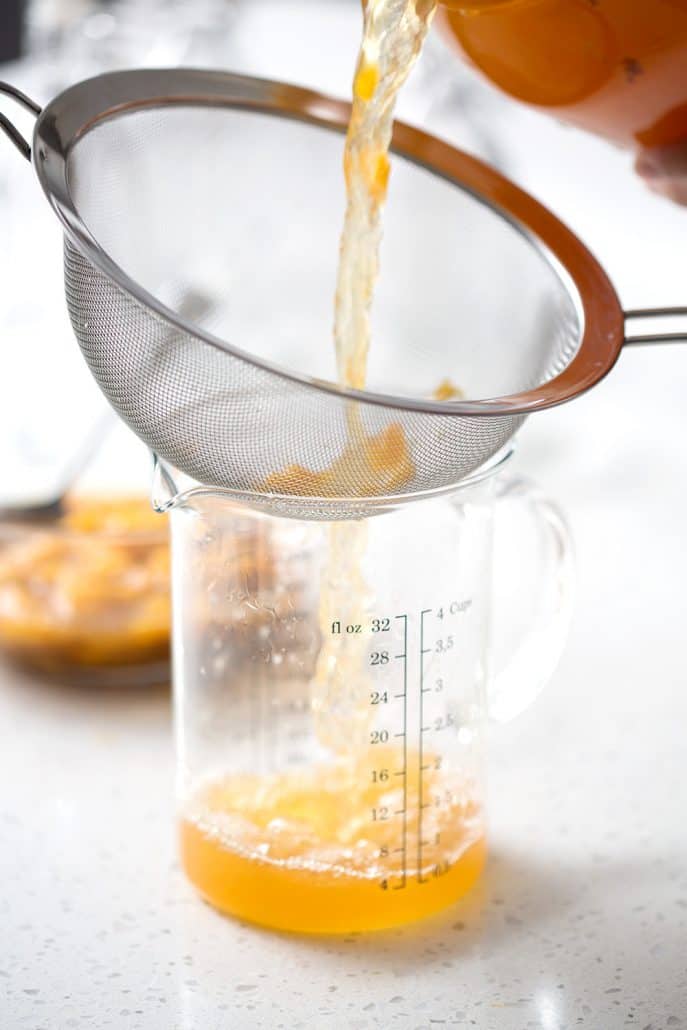
When you are ready to bottle, remove the mango from the jar.
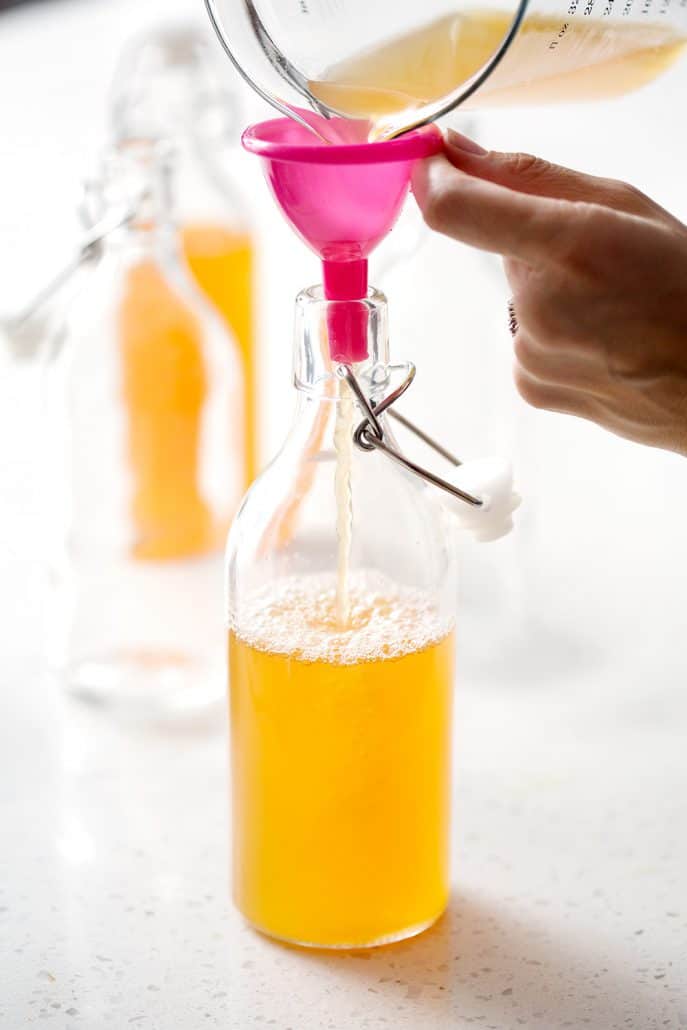
Using a strainer pour the kombucha into large measure cups. The measuring cups will make it easier to pour into the bottles.
Next pour the kombucha into individual bottles leaving some room at the top then cover tightly then place in the fridge.
If you like carbonated kombucha you’ll need to do a second fermentation.
To do a second ferment, instead of placing the bottles in the fridge, place the bottles somewhere at room temperature out of direct sunlight (such as a cabinet) and let them continue to ferment for 1-2 days.
Take care to ‘burp’ the bottles each day. Burping means that you need to open the bottles and release the pressure the fermentation creates. This is no joke. Do not forget because if the pressure builds up, the bottles could explode.
Notes
If you are using frozen fruit, you’ll need to make sure that it’s defrosted before adding it to the plain kombucha. You’ll also want it to be room temperature as the drastic change in temperature of the kombucha can alter the fermentation process.
Take care to ‘burp’ the bottles each day. Burping means that you need to open the bottles and release the pressure the fermentation creates. This is no joke. Do not forget because if the pressure builds up, the bottles could explode.
As long as you can find ripe, juicy mangoes you can also use fresh not frozen in this recipe.