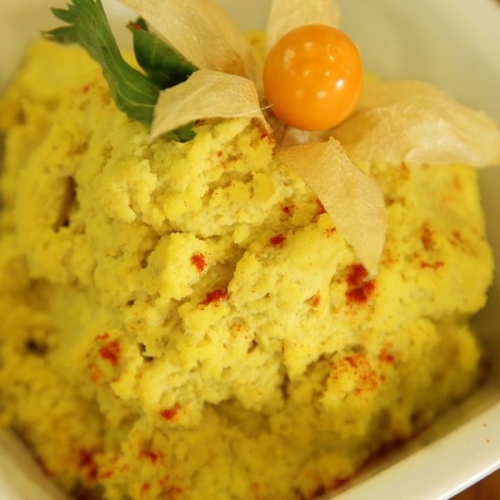
Here’s another recommended recipe we found from simplysentient.org.Reference Link:
Lupin Cheese:
Lupin Cheese – A Savory Vegan Delight
Lupin cheese is a deliciously salty and savory vegan cheese made from lupin beans. This versatile cheese works wonderfully as a dip, antipasto, or salad topping, serving as a fantastic alternative to traditional soft cheese spreads. The preparation is simple—strain, rinse, and drain the beans multiple times to eliminate any bitterness. Then, blend them with a few key ingredients until smooth. In just 10 minutes, you’ll have a creamy, flavorful plant-based cheese ready to enjoy!What Are Lupin Beans?
Lupin beans, also known as lupini beans, are not commonly found in the vegetable section of most supermarkets but are readily available in health food stores. They are the second-highest protein-containing bean after soybeans and have the lowest carbohydrate content among beans, making them an excellent choice for weight loss and maintaining a healthy weight.Lupini beans are a distinct variety of small yellow beans, similar in appearance to broad beans but smaller. Traditionally cultivated in the Mediterranean, they have now spread to North Africa, Europe, and even Australia. In their raw form, lupini beans are extremely bitter due to naturally occurring alkaloids. To make them palatable, they are typically pickled in brine and rinsed for several days to remove the bitterness. In many Mediterranean and Middle Eastern countries, lupini beans are enjoyed as a snack, often paired with beer or black coffee.
Lupini Beans Around the World
In Portugal, lupini beans are known as tremoços, while in Spain, they are called altramuces. In Egypt, they are referred to as termes and are commonly eaten during the Sham el-Nessim national festival. Italians often combine lupini beans with olives, creating a flavorful, salty snack that is widely available in Italian delis, Mediterranean markets, and Middle Eastern shops.How to Prepare Lupini Beans
Lupini beans require an extensive process of soaking, rinsing, and brining to remove bitterness and toxins. This traditional preparation method requires multiple saltwater baths, making the beans taste naturally salty. While the process can be done at home, it is tedious and water-intensive. I once attempted it myself, only to end up discarding the entire batch! For convenience, it is best to purchase pre-brined lupini beans that have already been soaked and processed, making them ready for consumption.A Protein-Rich Superfood
Lupini beans are exceptionally high in protein and contain a thin outer skin rich in fiber. While many people prefer to remove the skin, I recommend leaving it intact to maximize the protein content. When used in our lupini cheese spread, the texture may be slightly coarse, but the taste remains just as delicious!Now, Let’s Jump Right Into the Recipe!
Ingredients
- 2 cups lupin beans, pre-brined
- 2 tablespoon nutritional yeast flakes
- 1 tablespoon black Himalayan salt
- 1 cup extra-virgin coconut oil
- 1/2 teaspoon turmeric powder
- 1/2 teaspoon smoked paprika powder
- 1 lemon, juiced
- 1/2 cup basil or coriander leaves, finely chopped
Instructions
1
Rinse and strain the lupin beans three times if using pre-brined beans.
2
Combine all ingredients in a high-power blender and blend until a very smooth paste forms.
3
Stop the blender as needed to scrape down the sides and ensure even blending.
4
Transfer the smooth paste to a bowl and garnish with a sprinkle of paprika powder.
5
For added freshness, optionally mix in or top with the basil or coriander leaves.
6
Serve with crackers, bread, or use as a spread on sandwiches, rotis, or salads.
Nutrition
356.0
Calories6.0g
Carbohydrates0.0mg
Cholesterol36.9g
Fat1.3g
Fiber2.1g
Protein31.5g
Saturated fat736.0mg
Sodium0.3g
SugarNotes
STORAGE: The lupin cheese can be stored in an airtight mason jar in the refrigerator (or at room temperature) for up to one month.

About Dada Shivananda
Dada Shivananda is a renunciate monk of the Ananda Marga order, dedicating his life to social service and teaching people about practices that evolve body, mind and soul. He has two decades of experience with delicious vegetarian food that is also healing.
Jeannie notes.. Above is curated for evaluation and recommendation from simplysentient.org
Read full article here:
Lupin Cheese
reco low-cal
Leave a Reply